Tech Under Scrutiny: To Cast or not to Cast
This hardware holds a special place in my life; taking the place of traditional satellite and cable television. The first generation Chromecast sits snugly inside the main living room television and unlike the future generations, the original device needs a separate power source - either coming from an outlet or another USB port on the television. (The only significant difference is that with a separate power source you can power the television by pairing from your device instead of powering from your television first.) Since I've been using this device since about 2014, I never thought much about privacy or security at home. On further inspection, (because of this blog) Google gives plenty to be suspicious about.
1. Lack of Google's transparency across devices.
Since Google made the device, and consequently the Google Home app needed to run Chromecast, the initial thought was 'there should be a privacy policy page for both'. Unfortunately, the best each page can do was provide a link back to Google's main privacy policy. Logical on Google's part, seeing how Chromcast and the Google Home app are Google products. However, if the average consumer wanted to see what the privacy policy of Chromecast was, they would have to slog through a little over 4000 words.
What is given when looking at individual privacy policies are short snippets of policies that don't cover much in terms of policies of other third-parties. Since Chromecast can be cast on televisions through apps on the phone, Google tends to shift the priority by telling users to check out those privacy policies instead. The major issue with this, if Google allows a third party - and that third party goes out of their way to disrupt and intrude on the privacy of its users, then Google has no responsibility. No responsibility to either the damage to the user or damage prevention so another case of privacy breach doesn't happen. This gives Google the ability to shirk off accountability, at least in the Courtroom.

2. How does it work, exactly?
Chromecast uses a remote device from something called the DIAL (Discovery and Launch) protocol. This protocol was jointly developed by Netflix and YouTube, and is owned by Google. The way it works, to simplify it down, is by having the DIAL device sync up to the DIAL remote, if they are on the same network. Then launching the program to stream and watch on your television is simple and easy. Individual devices, such as your phone or laptops, become the client and the Chromecast stick itself is the server. (How Chromecast works.)
This is alarming, in that whatever device you are using could have its data collected. The server could collect data from the client without any issues and access to that specific server seems limited. If this is suppose to be an exchange for the services, I don't believe that what Google is doing is a fair exchange.
3. Chromecast and Google versus privacy and third-party support.
On Chromcast's privacy policy, found here, the hardware collects data for crash reports, usage data, and system activity. By usage data, Google is able to see the functionality of the device that I am using, including the domains of the apps I cast. A strange thing to collect when Google tells me that I have the see third-party privacy polices when Google collects my data on those sites.
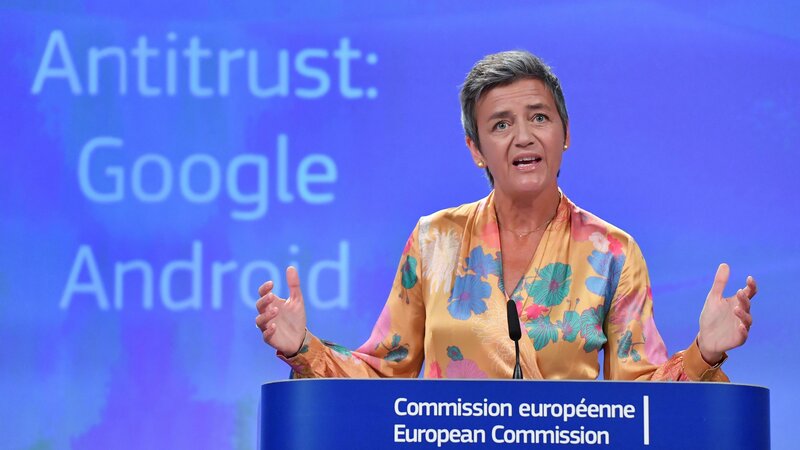
The issue I have with this is the transactions between the parties here; namely, how much influence does Google have over what ads will I get? Despite not explicitly stating any third parties, it would be beneficial for Google to run targeted ads on those third party websites, or stop third-party ads. This has gotten Google in 'trouble' the past. The LA Times found Google to be restricting third-party ads in favor of their own (Link to the article here). Google, and other tech. companies usually end up having to fight off 'troubling fines', such as Google being fined $1.7 billion from the EU for overstepping their boundaries. I call in 'trouble' because these fines are a little more than a slap on the wrist. These amounts seem a lot, but Google reportedly made a little less than 10 billion dollars in profit the first 3 months of 2019 (link to the CNN article).
While seeing that overreach in the market as a bad thing, the international political community can't do much to stop Google. It's not that different from the school bully's universal punishment being detention. No matter how much detentions we hand out, its not going to stop Google from bullying their third-party support.
So what would this translate to Chromecast? Seeing as Chromecast itself doesn't present ads. The apps that are free to use would run ads, and Google could have those third-part disruptions. The ads shown on the apps would be shown on Cast, therefore market competition for ad placement is in Google's court most of the time.
4. Last remarks
From a creativity standpoint - the way Google gathers data, prohibits third party ads, and collects data from a device that already cost $35 dollars - Google is creatively lazy and morally questionable. In the age of automation, where the walls are made of code instead concrete and cement, advertisements and how to target a larger crowd is creatively bankrupt. Ads rarely have a unique way to grab our attentions and rely on a huge cloud of knowledge about the user to basically leave sticky note reminders about what they 'should' by instead of what the 'could' buy.
On the morality of things, I see it in line with how Humanity looked in Pixar's "Wall-E". Our choices become arbitrary. The market population would continue to conform to the point that companies like Google could dictate what is best for people. I'm not sure a single corporation wants that level of ultimate responsibility. They, after all, just want to make profits.
Work Cited
“Privacy Policy – Privacy & Terms.” Google, Google, https://policies.google.com/privacy?hl=en#whycollect.
Johnson, Bernadette. “How Chromecast Works.” HowStuffWorks, HowStuffWorks, 29 Jan. 2014, https://electronics.howstuffworks.com/chromecast2.htm.
“Google Fined Nearly $1.7 Billion for Ad Practices That Violated European Antitrust Laws.” Los Angeles Times, Los Angeles Times, 20 Mar. 2019, https://www.latimes.com/business/technology/la-fi-tn-google-ad-practices-fine-20190320-story.html.
1. Lack of Google's transparency across devices.
Since Google made the device, and consequently the Google Home app needed to run Chromecast, the initial thought was 'there should be a privacy policy page for both'. Unfortunately, the best each page can do was provide a link back to Google's main privacy policy. Logical on Google's part, seeing how Chromcast and the Google Home app are Google products. However, if the average consumer wanted to see what the privacy policy of Chromecast was, they would have to slog through a little over 4000 words.
What is given when looking at individual privacy policies are short snippets of policies that don't cover much in terms of policies of other third-parties. Since Chromecast can be cast on televisions through apps on the phone, Google tends to shift the priority by telling users to check out those privacy policies instead. The major issue with this, if Google allows a third party - and that third party goes out of their way to disrupt and intrude on the privacy of its users, then Google has no responsibility. No responsibility to either the damage to the user or damage prevention so another case of privacy breach doesn't happen. This gives Google the ability to shirk off accountability, at least in the Courtroom.
2. How does it work, exactly?
Chromecast uses a remote device from something called the DIAL (Discovery and Launch) protocol. This protocol was jointly developed by Netflix and YouTube, and is owned by Google. The way it works, to simplify it down, is by having the DIAL device sync up to the DIAL remote, if they are on the same network. Then launching the program to stream and watch on your television is simple and easy. Individual devices, such as your phone or laptops, become the client and the Chromecast stick itself is the server. (How Chromecast works.)
This is alarming, in that whatever device you are using could have its data collected. The server could collect data from the client without any issues and access to that specific server seems limited. If this is suppose to be an exchange for the services, I don't believe that what Google is doing is a fair exchange.
3. Chromecast and Google versus privacy and third-party support.
On Chromcast's privacy policy, found here, the hardware collects data for crash reports, usage data, and system activity. By usage data, Google is able to see the functionality of the device that I am using, including the domains of the apps I cast. A strange thing to collect when Google tells me that I have the see third-party privacy polices when Google collects my data on those sites.
The issue I have with this is the transactions between the parties here; namely, how much influence does Google have over what ads will I get? Despite not explicitly stating any third parties, it would be beneficial for Google to run targeted ads on those third party websites, or stop third-party ads. This has gotten Google in 'trouble' the past. The LA Times found Google to be restricting third-party ads in favor of their own (Link to the article here). Google, and other tech. companies usually end up having to fight off 'troubling fines', such as Google being fined $1.7 billion from the EU for overstepping their boundaries. I call in 'trouble' because these fines are a little more than a slap on the wrist. These amounts seem a lot, but Google reportedly made a little less than 10 billion dollars in profit the first 3 months of 2019 (link to the CNN article).
While seeing that overreach in the market as a bad thing, the international political community can't do much to stop Google. It's not that different from the school bully's universal punishment being detention. No matter how much detentions we hand out, its not going to stop Google from bullying their third-party support.
So what would this translate to Chromecast? Seeing as Chromecast itself doesn't present ads. The apps that are free to use would run ads, and Google could have those third-part disruptions. The ads shown on the apps would be shown on Cast, therefore market competition for ad placement is in Google's court most of the time.
4. Last remarks
From a creativity standpoint - the way Google gathers data, prohibits third party ads, and collects data from a device that already cost $35 dollars - Google is creatively lazy and morally questionable. In the age of automation, where the walls are made of code instead concrete and cement, advertisements and how to target a larger crowd is creatively bankrupt. Ads rarely have a unique way to grab our attentions and rely on a huge cloud of knowledge about the user to basically leave sticky note reminders about what they 'should' by instead of what the 'could' buy.
On the morality of things, I see it in line with how Humanity looked in Pixar's "Wall-E". Our choices become arbitrary. The market population would continue to conform to the point that companies like Google could dictate what is best for people. I'm not sure a single corporation wants that level of ultimate responsibility. They, after all, just want to make profits.
Work Cited
“Privacy Policy – Privacy & Terms.” Google, Google, https://policies.google.com/privacy?hl=en#whycollect.
Johnson, Bernadette. “How Chromecast Works.” HowStuffWorks, HowStuffWorks, 29 Jan. 2014, https://electronics.howstuffworks.com/chromecast2.htm.
“Google Fined Nearly $1.7 Billion for Ad Practices That Violated European Antitrust Laws.” Los Angeles Times, Los Angeles Times, 20 Mar. 2019, https://www.latimes.com/business/technology/la-fi-tn-google-ad-practices-fine-20190320-story.html.
(GOOGL), Alphabet. “Google: Profit and Sales Surge as Tax Rate Falls.” CNNMoney, Cable News Network, https://money.cnn.com/2018/04/23/technology/google-earnings/index.html.
“Chromecast Privacy Settings - Chromecast Help.” Google, Google, https://support.google.com/chromecast/answer/6076570?hl=en.

Comments
Post a Comment